Reading the Rangeland Ledger: A 2026 Buyer's Guide to Kenyan Carbon Projects and Wildlife Claims
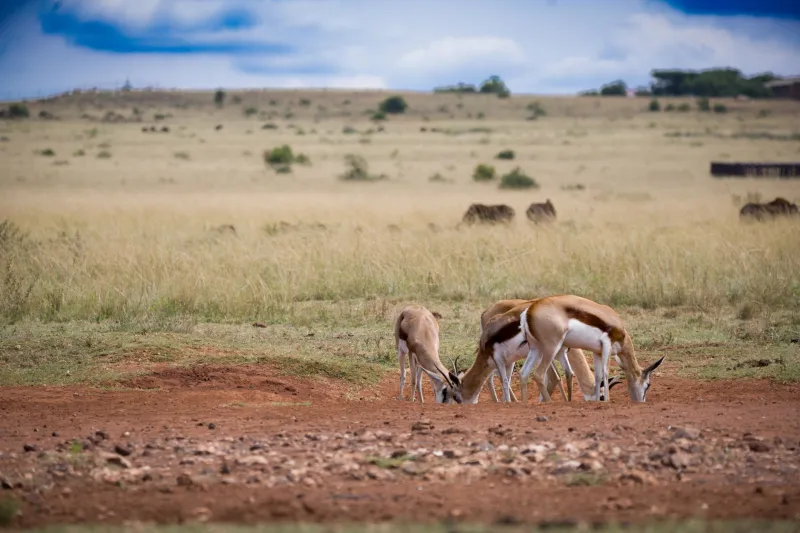
Carbon credits are having a moment in Kenya's rangelands. US companies looking to meet climate commitments, donors seeking measurable impact, and safari operators advertising carbon-neutral itineraries are all turning to the same landscapes: acacia woodlands, open grasslands, and community conservancies where livestock, wildlife, and carbon claims now share a boundary. The appeal is obvious. Rangelands cover a large share of Kenya, they support pastoral livelihoods and iconic species, and they are under pressure from land fragmentation, drought, and unsustainable grazing.
But a carbon credit is not a mood. It is a registry-issued instrument tied to a specific project area, a specific methodology, and a specific claim about atmospheric carbon. Wildlife co-benefits are not automatic. In 2026, the practical question for buyers and travelers is not whether a project sounds conservation-friendly. It is whether the carbon accounting holds up, whether the wildlife claims are measured rather than implied, and whether the money reaches the people who manage the land.
What a rangeland carbon credit actually represents
In voluntary carbon markets, one credit generally represents one metric ton of carbon dioxide equivalent that has been reduced or removed from the atmosphere. For Kenyan rangelands, projects usually fall into two broad families. Grassland projects tend to focus on soil organic carbon, often through changed grazing management, fire control, or removal of invasive woody species. Acacia and woodland projects tend to focus on avoided degradation or restoration of woody biomass, sometimes alongside grazing reforms.
Both families depend on a baseline: a modeled picture of what would have happened without the project. That baseline is where much of the technical dispute begins. A project must show additionality—that the carbon benefit would not have occurred under business as usual—and it must account for leakage, meaning emissions or land-use pressure displaced beyond the project boundary. Permanence is another constraint. Fire, drought, land conversion, or a change in grazing rules can reverse gains. Registries typically require buffer pools or other safeguards, but no buffer eliminates the risk.
Measurement, reporting, and verification, usually shortened to MRV, is the backbone of credibility. A serious rangeland project combines field data, such as soil samples and vegetation surveys, with remote sensing and modeled estimates. Independent auditors then review the methodology, the data, and the claims. The details matter: a project that reports carbon without transparent MRV is asking buyers to trust a story rather than a ledger.
Where wildlife enters—and where the claim can slip
Wildlife is rarely the core product of a carbon project. It is a co-benefit, and co-benefits are where marketing can outrun evidence. A project can be carbon-valid and biodiversity-weak. It can also be good for wildlife and poorly documented for carbon. The two claims should be assessed separately.
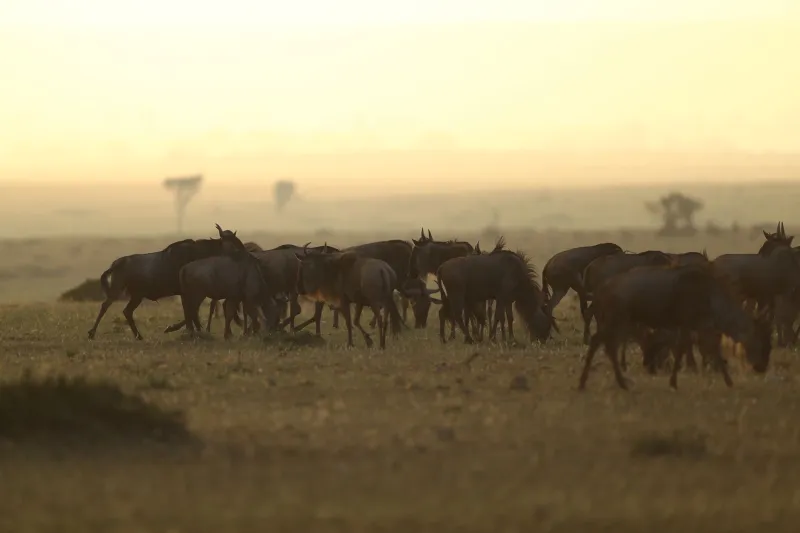
A credible wildlife co-benefit claim needs more than photographs of elephants near an acacia. It needs a measurable indicator, a baseline, and a counterfactual. Are wild herbivore counts improving relative to comparable areas? Is habitat quality changing? Are water points, fences, or grazing rotations altering movement for wildlife? Does the project monitor displacement, or only presence? Charismatic species are easy to photograph and hard to count. A project that promises wildlife gains without a monitoring design is making an assertion, not reporting an outcome.
There are real trade-offs to watch. Reduced livestock density may allow grass recovery, but it can also shift grazing pressure and income away from pastoral households. New water points may benefit livestock and wildlife, or they may concentrate animals and degrade habitat. Fencing may protect regeneration, but it can cut movement corridors. Genuine conservation finance should make these trade-offs visible, not wish them away.
The verification chain a buyer should trace
US buyers should begin with the registry, not the sales brochure. Ask for the project ID and confirm that the project is listed, that credits have been validated and verified by an independent body, and that the specific vintage being purchased has been issued. Then ask whether the credits will be retired on the buyer's behalf. A credit that is bought but not retired has not been used to offset anything.
Next, request the monitoring reports and the auditor's statement. Look for the methodology used, the project boundary, the baseline assumptions, and how the project handles leakage and permanence. Check whether the project has a grievance mechanism and whether benefit-sharing arrangements are documented. For community conservancies, ask how free, prior, and informed consent was obtained and how payments flow to households or communal institutions.
Double counting is another practical concern. A buyer should know whether the same emission reduction is being claimed by another entity, including a host-country program. In voluntary markets, the rules are still evolving, and the paperwork can be technical. That is precisely why a buyer should not rely on a single paragraph of assurance from a broker.
Six questions for US buyers
First, what is the exact project boundary, and who holds the land rights? Second, what baseline and additionality evidence supports the credit? Third, what MRV data exist, and who audited them? Fourth, how are permanence risks addressed, including fire and drought? Fifth, how are benefits shared with local communities, and what consent process was used? Sixth, what evidence supports any wildlife co-benefit claim, and what would the area have looked like without the project?
A credible seller should be able to answer these questions without resorting to a slide deck of wildlife photography. If the answers are vague, the buyer is not being asked to invest in conservation. The buyer is being asked to accept a narrative.
What safari travelers should ask
Travelers encounter carbon claims through lodges, tour operators, and airline add-ons. A "carbon-neutral safari" may include a genuine offset, a contribution to a conservancy, or a calculation with no retirement behind it. Ask which project is supported, whether the credit is retired, and whether the lodge can provide a project ID. Distinguish between reducing emissions on site and purchasing credits elsewhere. Both can matter, but they are not the same claim.
Travelers can also ask how tourism revenue supports wildlife management beyond the carbon ledger. Are conservancy rangers funded? Are grazing plans enforced? Is wildlife monitoring independent? A lodge that cannot explain its conservation model is not necessarily acting in bad faith, but it has not given a traveler enough information to judge the claim.
Red flags worth naming
Be cautious when a project describes itself only as "acacia carbon" without a methodology or registry entry. Be cautious when wildlife benefits are asserted but not monitored, when benefit-sharing is described as a future intention, or when the same credit appears under multiple sales platforms. Be cautious when a project area overlaps contested land or when pastoral access is restricted without a clear agreement. And be cautious when the only evidence of impact is a before-and-after photograph with no counterfactual.
Genuine rangeland carbon finance can support conservation. It can pay for grazing plans, invasive species removal, fire management, ranger salaries, and community dividends. It can also distort management if carbon revenue rewards one outcome while ignoring wildlife, livelihoods, and land rights. The difference is not the presence of an acacia tree on the cover of a report. It is the quality of the ledger behind it. In 2026, buyers and travelers should ask for both: a carbon claim that can be verified, and a wildlife claim that can be measured.