When Enthusiasm Becomes a Line Item: Auditing Conservation Volunteer Placements in Kenya

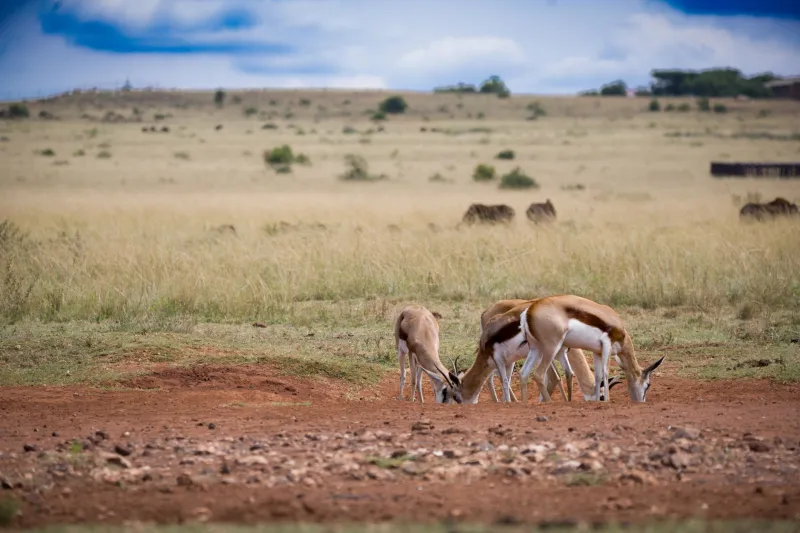
Photo by Photo by David Clode on Unsplash on Unsplash
The minibus leaves the guesthouse in Nanyuki at 6:40 a.m., carrying eight volunteers in matching polo shirts toward a conservancy gate. By 8:15 they are painting a stretch of boundary fence. By 10:30 they are posing with a rescued tortoise. By noon they are back at the guesthouse, and the staff member who would ordinarily have painted that fence is cleaning the kitchen. None of this is illegal, and little of it is unusual. The question worth asking, on a continent where conservation budgets are scrutinized line by line, is whether any of it constitutes conservation.
Volunteer placements are now a standard product in the Kenyan travel market. US intermediaries package two- to four-week stints with accommodation, transfers, and a schedule of tasks, and a placement fee typically between $1,500 and $4,000 excluding airfare. The sales pages promise hands-on contributions to elephant monitoring, seed nurseries, or anti-poaching logistics. The field reality is more varied, and considerably more uneven, than either the brochures or the critics suggest.
Four models, four different ledgers
The programs encountered in a two-month survey of placements across Laikipia, Amboseli, and the southern coast fall into four broad models, each with a different relationship to measurable outcomes.
The first is monitoring support: volunteers sort camera-trap images, walk transects, or log carnivore sightings for a host research unit. This model produces genuine value when the data enters a defined database with a named custodian and an agreed protocol. It produces very little when photographs are uploaded to a shared drive that no analyst opens. The binding constraint is usually training time: a two-week volunteer who spends three days learning species identification often contributes less than the paperwork to document her.
The second is nursery and habitat work: seed collection, potting, and outplanting for rangeland or riverine restoration. This is durable work if the species are native and the outplanting site is secured against grazing. It is theater if seedlings are potted for photographs and left to desiccate behind a fence.
The third is sanctuary and anti-poaching support. Volunteers in Kenya cannot legally perform armed patrols, and any program implying otherwise should be treated with caution. Legitimate support here is logistical: fence maintenance, vehicle cleaning, radio-room assistance, or record-keeping. It is useful, unglamorous, and indistinguishable from paid work.
The fourth is photo-op chores: feeding, painting, sorting donated clothing, and "walking with" animals. Measured against wildlife outcomes, the value is close to zero. Measured against local employment, it can be negative.
The displacement question
Kenyan conservancies and sanctuaries employ field staff at local wages. When a volunteer performs a task that a salaried staffer would otherwise be paid for, the placement fee stops functioning as a conservation donation and starts functioning as a wage subsidy to the operator. That is not necessarily disqualifying, but it should be disclosed, and it rarely is. A useful question for any program is the ratio of local staff to volunteers, and the share of the operating budget that goes to Kenyan payroll. Programs that answer readily tend to be the ones worth considering.
What a measurable outcome looks like
Claims of impact are cheap; protocols are not. A working monitoring program can name the baseline, the sampling interval, the data custodian, and the point at which results feed back into management decisions. A working nursery can state seedling survival rates at twelve and twenty-four months. An honest sanctuary can describe which animals are candidates for release and which are not. A program that cannot answer these questions by the third month of a placement is not a monitoring program, whatever the itinerary says.
A vetting list for US travelers
Before paying a deposit, ask the following in writing, and treat evasiveness as an answer in itself.
- Who employs the field staff? How many are Kenyan, and at what wage band?
- What share of my fee reaches the host site? Intermediaries should disclose their margin; many will not.
- Which scheduled tasks would happen without me? If the answer is "none," the placement is a purchase, not a contribution.
- Where does the data go? Name the database, the custodian, and the audit schedule.
- What training precedes unsupervised work? Especially for camera-trap sorting and any animal contact.
- What is the policy on minors and hands-on animal work? Reputable programs limit both.
- May I speak with a former volunteer not selected by the sales agent? Ask for two, independently.
- Is any part of the fee tax-deductible? In most cases the answer is no, and a US 501(c)(3) receipt does not convert a travel package into a charitable gift. If a US entity is involved, its Form 990 is public and worth five minutes.
Two further checks are worth the effort. Ask for the Kenyan host organization's registration certificate, and confirm that the itinerary's conservation partner is a distinct entity from the guesthouse that houses you. Vertical integration is common and not inherently improper, but it concentrates the incentive to keep beds full regardless of conservation value.
The bill and the balance
None of this argues that volunteering in Kenya is without value. Well-run placements supply labor that stretched field teams genuinely lack, and they produce alumni who advocate for Kenyan conservation for decades. But the sector's weakest products are sold on the same language as its strongest, and the buyer bears most of the cost of telling them apart. A deposit wire is a poor moment to start asking questions. The schedule, the payroll, and the data custodian are better places to begin.