Panels, Paths, and Promises: A Field Test for Kenya’s Solar Expansion
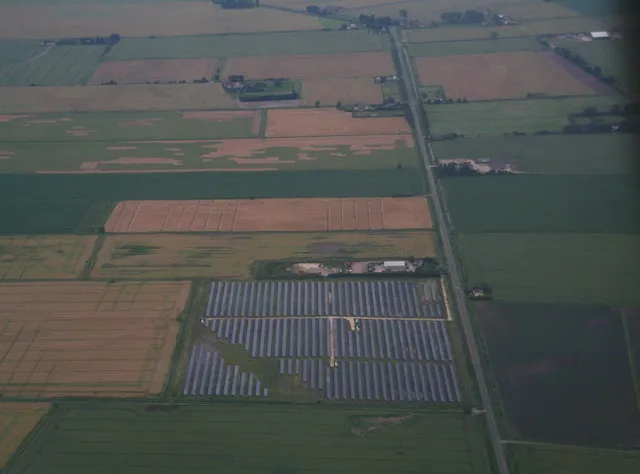
Photo: Chris , CC BY-SA 2.0, via Wikimedia Commons
In Kenya, a solar project can be low-carbon and still be badly placed. As the country’s 2026 renewable-energy procurement accelerates, utility-scale arrays and their transmission lines are moving into rangelands that elephants, giraffes, and cheetahs still use as movement corridors. The relevant test is not only emissions per megawatt-hour. It is whether the project preserves safe passage across a working landscape.
A corridor audit begins with a simple correction: clean generation is not the same as clean siting. Solar panels do not burn fuel, but they do occupy ground, require water, invite fencing, and demand wires. Each of those choices can be managed well or poorly. For American investors comparing a Kenyan solar asset to a Nevada array, the familiar due-diligence categories apply, but the ecological context is different. Kenya’s rangelands are not empty. They are used, seasonally and daily, by wildlife, livestock, and people.
Clean Generation, Contested Ground
Utility-scale solar is land-intensive. Arrays, access roads, inverters, substations, and construction laydown areas together alter how water moves, how vegetation is managed, and how animals move. In Kenya, many candidate sites sit in semi-arid landscapes where a single fence line or new road can become a barrier out of proportion to its footprint. A project may occupy only a few hundred hectares and still sever a pinch point between wet-season and dry-season range.
Siting is therefore the first audit item. Investors and donors should ask for landscape-scale maps, not only site plans. They should ask how corridor data were collected, whether they cover both wet and dry seasons, and whether project boundaries were adjusted after those data arrived. A credible developer should be able to explain why this site, and not a nearby alternative, was chosen. The answer should include wildlife movement, not just slope, irradiance, and grid access.
The Fence Is a Decision
Perimeter fencing is usually presented as a security measure. For wildlife, it is a filter. Chain-link with small mesh, concrete plinths, and barbed outriggers can stop giraffes and elephants; cheetahs may slip through gaps but risk entanglement. The audit question is not whether a fence exists. It is what the fence does to movement, and whether anyone is measuring that effect.
A mitigation hierarchy should be visible in the project record: avoid sensitive crossings, minimize barrier length, restore or compensate for residual harm. Where fencing is unavoidable, wildlife-friendly design matters. So does governance. Who can authorize a gate opening? How quickly? Are there passages at known crossing points, and are they monitored with cameras or tracks? A fence that is never opened for a passing herd is not wildlife-friendly simply because it has a gap on the drawing.
Water in a Dry Land
Panel washing and dust suppression consume water. In arid rangelands, a borehole drilled for a solar plant can become a new straw in a shared aquifer. The audit should compare projected water use with local recharge, existing livestock needs, and wildlife access. A water permit is not a water balance. Donors should treat water as a cumulative issue, especially where several projects cluster around the same basin.
Construction traffic and labor also matter. A solar site can bring new roads, new settlements, and new pressure on grazing. These are not reasons to reject solar. They are reasons to require honest baseline data and transparent monitoring.
Wires Beyond the Fence
Transmission lines extend a project’s ecological reach well beyond the array. Routes can fragment habitat, create collision and electrocution risk for birds, and open access roads into previously quiet country. A solar plant may be fenced and patrolled; the line may not be. The corridor audit follows the wire.
Ask for route alternatives, raptor-safe design, and a cumulative assessment that considers other planned lines and projects. A single transmission line may be manageable. Three lines through the same rangeland, each assessed in isolation, can produce a different outcome.
Promises With Expiry Dates
Environmental and social management plans often include commitments: corridor monitoring, fence gaps, offset payments, community ranger patrols. The audit asks who funds them, for how long, and what triggers corrective action. Are commitments written into construction contracts, power purchase agreements, or only planning documents? US investors should check whether mitigation is bonded and whether performance is reported publicly. Donors should require annual monitoring that independent reviewers can read.
Travelers have a smaller lever, but it is not zero. A lodge that advertises solar power can be asked whether its array was sited with wildlife review. The heavier leverage, however, sits with capital.
A Corridor-First Checklist
- Require landscape-scale corridor maps before permitting, not after construction.
- Audit fencing for permeability, gate management, and independent monitoring.
- Compare water use with recharge, livestock demand, and wildlife access.
- Assess transmission routes and cumulative effects beyond the project fence.
- Put mitigation promises into enforceable contracts with budgets and deadlines.
- Publish annual monitoring results in a form that communities and donors can read.
Kenya’s 2026 solar expansion can be compatible with wildlife movement. It will not be compatible by default. The question is not whether solar belongs in Kenya’s rangelands. It is whether a given project belongs on that particular path.