After the Herd Moves On: The Unseen Replanting Work of Kenya’s Elephants, Rhinos, and Giraffes
In Kenya’s rangelands, restoration is usually discussed in the language of intervention: fencing, reseeding, grazing plans, and the careful arithmetic of carrying capacity. A quieter process is also at work. It walks in on four legs, browses for hours, and leaves behind a moist, nutrient-rich package of seeds. The science is called endozoochory—seed dispersal after passage through an animal’s gut—and it is giving Kenyan researchers a new way to think about what wildlife does for a landscape after the animal has moved on.
A Seed Bank That Walks
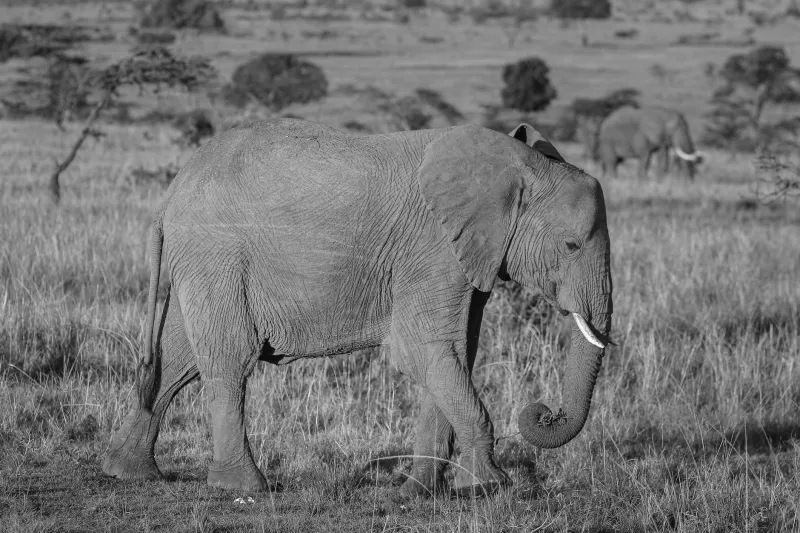
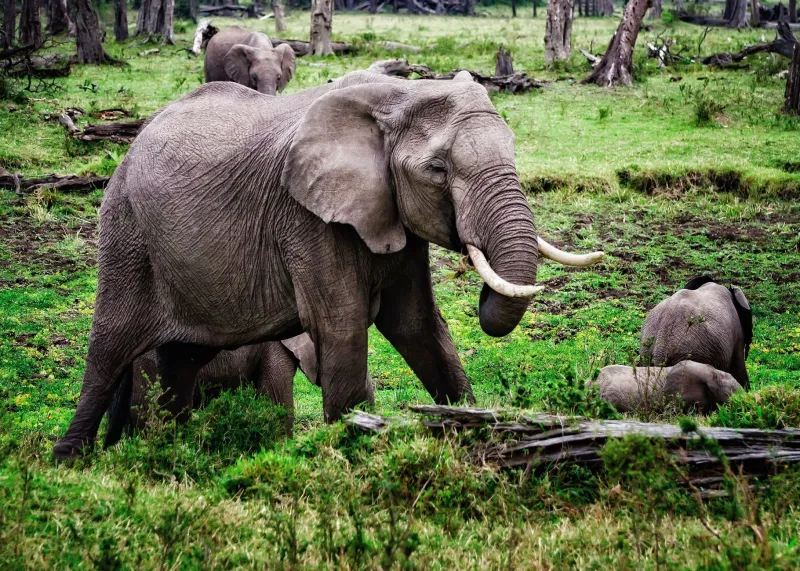
Megaherbivores are not often described as gardeners. Yet elephants, rhinos, and giraffes can move seeds across distances that would be difficult or impossible for a plant to achieve on its own. An elephant may carry viable seeds tens of kilometers in a single journey. A rhino or giraffe may move them shorter distances, but still far enough to connect isolated patches of habitat. The animals are, in effect, a mobile seed bank with digestion as its filing system.
The process is not simple. Some seeds are destroyed in the gut. Others pass through intact. Still others may benefit from abrasion that weakens a hard seed coat and speeds germination. The result depends on the plant species, the animal species, the season, and the composition of the diet. What emerges is not a universal rule but a set of conditional advantages—some seeds travel well, some do not, and some are planted in exactly the kind of microsite they need.
What the Dung Plots Show
Across parts of Laikipia, Tsavo, and Samburu, field teams have been comparing germination in dung plots with paired control plots. The design is straightforward but demanding. Fresh dung is marked and monitored. Nearby plots without dung are watched in the same way. Seedlings are counted, identified, and sometimes protected from grazers with small exclosures so that researchers can separate germination from early survival. Greenhouse trials add another layer: dung samples are collected, kept moist, and observed for seedlings that emerge from seeds that survived gut passage.
The early picture is not a blanket endorsement of dung as a restoration cure. Some plant species germinate more readily in dung plots than on bare ground. Others show little difference. A few do worse, perhaps because dung attracts seed predators or because the seedling is poorly matched to the microsite. Dung type matters as well: elephant dung is fibrous and bulky, rhino dung is more compact, and giraffe pellets create a different physical environment. Seasonality adds further variation. A dung plot that is a nursery in a wet month may be a hostile place in a dry one.
During the 2026 field season, the most useful finding has been less about a single dramatic result than about a shift in emphasis. Researchers are asking not whether megaherbivores disperse seeds, but which seeds, under which conditions, and at what distances. That is the kind of question that turns an elegant ecological idea into something land managers can use.
Corridors as Restoration Infrastructure
If animals are delivering seeds along their routes, then keeping those routes open becomes a restoration strategy. A corridor is usually valued for allowing wildlife to move between patches of habitat. The seed-dispersal view adds another function: corridors are also conduits for genetic material and for the next generation of plants. A blocked corridor does not simply stop an animal. It can interrupt a planting process that has been underway for a very long time.
This matters in a country where fences, roads, settlements, and changing land use can fragment rangeland. A herd that is forced to turn back at a fence is not only losing access to water or forage. It is also failing to deposit seeds in places where they might have taken root. For restoration planners, the implication is not that dung can replace active reseeding. It is that wildlife movement and vegetation recovery are more closely linked than the usual categories suggest.
American readers may recognize a parallel. In parts of the U.S. West, bison are treated as ecological engineers whose grazing and wallowing shape prairie vegetation. Kenya’s megaherbivores can be understood in a similar frame, with an added emphasis on seed transport. The comparison is not exact, but it points to a shared principle: large animals are not just inhabitants of a landscape. They are part of its maintenance.
What Ethical Viewing Has to Do With It
For travelers from the United States and elsewhere, the seed-dispersal story offers a fresh way to value a safari. The most important conservation work is not always visible at the moment of a sighting. It happens after the elephant has moved into the trees, after the rhino has left the waterhole, after the giraffe has browsed its way along a thicket edge. Ethical viewing protects that unfinished work.
That means keeping a respectful distance, staying on established roads where off-road driving is not permitted, and resisting the urge to crowd an animal for a better photograph. It means asking outfitters how they support community conservancies and whether their routes respect known wildlife corridors. It also means recognizing that a quiet sighting, with the animal moving on its own terms, is not a lesser experience. It is the experience that allows the ecological process to continue.
The Limits of the Finding
None of this makes megaherbivores a substitute for habitat protection. Seed dispersal is one process among many. Fire, rainfall, grazing pressure, soil condition, and climate variability all shape whether a seedling survives. Dung can be a favorable microsite, but it is not a guarantee. Long-term data are still needed to show how often dispersed seeds become established plants, and how those plants affect the wider rangeland over years rather than seasons.
The more defensible conclusion is also the more interesting one. Kenya’s elephants, rhinos, and giraffes are not merely symbols of wildness or attractions for visitors. They are active agents in the vegetation that sustains them. When a herd walks home, it may be planting part of the route. Protecting that walk—through corridors, careful tourism, and land-use decisions that leave room for movement—is a form of restoration that begins long before anyone plants a seedling.