The Herd’s Second Harvest: Measuring Kenya’s Dung Beetles as a Working Asset
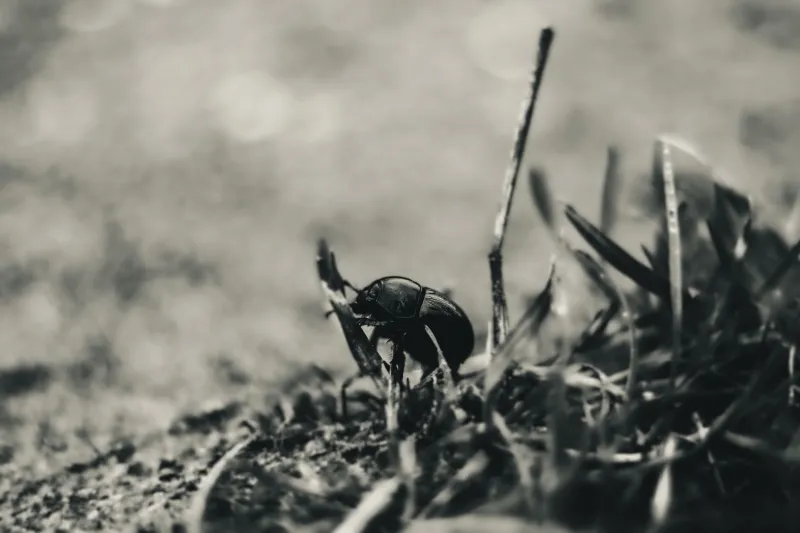
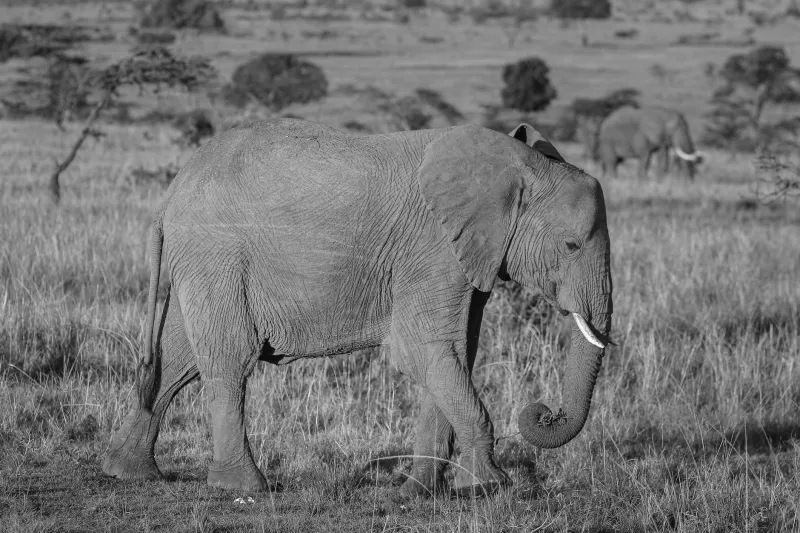
On a rangeland in Laikipia, the most conspicuous sign of elephants is not always the elephants. It is what they leave behind: dung pats that, within minutes, become a busy intersection. Small black beetles arrive from nowhere, some rolling balls away, others tunneling beneath the pile. The scene is easy to overlook. It is also one of the most consistent nutrient-and-seed delivery systems in Kenya’s savannas.
An Unpaid Night Shift
Conservation attention tends to follow large animals. Elephants, lions, rhinos, and the rangelands they need dominate both research budgets and public imagination. Dung beetles sit at the other end of the visibility spectrum. They are small, often nocturnal or crepuscular, and difficult to identify without a hand lens or a reference collection. Yet the work they do is not marginal. It is part of the basic accounting of how savanna ecosystems stay productive.
The phrase that keeps coming up in conversations with field researchers is ecosystem service. In plain terms, the beetles are performing labor that would otherwise be done by slower chemical and microbial processes—or not done at all. Their activity affects soil, forage, wildlife health, and the economics of grazing. That is why a handful of U.S. entomologists and rancher-led groups have begun treating dung beetles less as a curiosity and more as something that can be sampled, compared, and perhaps valued.
What the Insects Actually Do
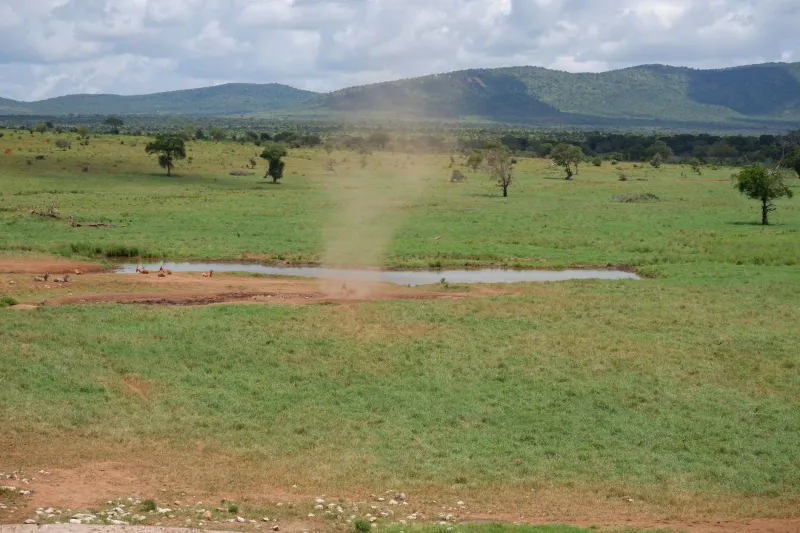
Dung beetles fall into broad behavioral groups. Rollers shape a ball and move it away; tunnelers bury dung beneath the pat; dwellers live inside it. The categories matter because they do not all provide the same services at the same rate. Across Kenya’s rangelands, the mix of species shifts with rainfall, soil type, vegetation, and livestock density.
The measurable functions are several. Beetles accelerate the return of nitrogen and phosphorus to the soil. They bury seeds, sometimes improving germination and dispersal. By removing dung quickly, they can reduce breeding sites for flies and interrupt the life cycles of some gastrointestinal parasites that affect livestock and wildlife. Their tunnels can improve water infiltration and soil aeration. None of these effects is unlimited or uniform, and researchers are careful to say so. In dry years, or on heavily compacted ground, the benefit may be modest. But the cumulative effect across a well-managed rangeland is difficult to ignore.
For a ranch or conservancy, the most practical metric is often dung removal rate: how much of a standardized dung pat disappears within a set number of hours or days. It is not a perfect proxy for every service, but it is repeatable, affordable, and easy to explain to nonspecialists.
How Kenyan Field Teams Count Them
Sampling dung beetles is low-tech in principle and demanding in practice. A field team may lay out transects across different grazing treatments, then set baited pitfall traps—plastic cups sunk flush with the ground and topped with a funnel—using fresh dung as bait. Timed removal experiments are also common: a known quantity of dung is placed on a marked patch, then weighed or photographed after intervals to see how quickly beetles take it down.
Sorting is the slow part. Specimens are collected, preserved, and identified to species or morphospecies in the lab. Some programs now use DNA barcoding to separate look-alike species. Others rely on trained parataxonomists and reference collections built over years. The result is a data set that can compare sites, seasons, and management practices.
This kind of monitoring is not free, but it is not prohibitively expensive either. A basic pitfall-trap survey can be run by conservancy scouts and county rangeland officers with modest training. The bottleneck is usually continuity: someone has to return to the same plots, at the same time of year, and process the samples. Without that repetition, the numbers describe a moment rather than a trend.
Why U.S. Labs and Ranchers Are Paying Attention
The American interest is not sentimental. In parts of Texas, Oklahoma, and California, ranchers and land-grant entomologists have spent years asking similar questions about dung beetle communities and grazing land health. They face many of the same concerns: parasite control, fertilizer costs, soil compaction, and the reliability of forage in dry years. U.S. researchers have developed sampling protocols and economic framings that Kenyan field teams can adapt, and Kenyan data can inform the broader global picture of how dung beetle communities respond to management.
There is also a practical investment angle. If dung beetles reduce the need for chemical parasite control or improve nutrient cycling, their presence has a value that never appears on a gate receipt. Ranchers in the United States are beginning to ask whether that value can be counted in cost savings or in avoided inputs. The same question is now being asked in Kenya, though with more caution. A credible case would pay for monitoring first, not for a quick beetle-based certification scheme.
The Investment Case, With Caveats
Economic estimates of dung beetle services usually rely on replacement cost: what would it cost to provide the same nutrient cycling or parasite suppression through fertilizer, machinery, or medication? Those figures are useful for illustration but easy to overstate. Beetles cannot substitute for sound grazing management, and their benefits vary sharply with rainfall and soil. A ranch that overstocks cattle will not fix the problem by protecting insects.
The more defensible approach is to treat dung beetles as one indicator among several. A monitoring program that tracks dung removal, species richness, soil condition, and forage production gives managers a fuller picture. For donors, that means supporting the unglamorous work of repeated sampling rather than a one-time survey. For travelers, it means recognizing that the small things underfoot are part of what makes a Kenyan savanna function.
What This Means for Visitors
Dung beetles will never headline a safari brochure, and they do not need to. Their value lies in the fact that they are everywhere the larger wildlife is, quietly processing what the herds leave behind. A visitor who notices them is seeing a working ecosystem, not just a scenic one. The most responsible takeaway is modest: support camps and conservancies that fund rangeland monitoring, ask guides about the less conspicuous species, and understand that conservation in Kenya is not only a matter of fences and patrols. It is also a matter of accounting for the unpaid work that keeps the range alive.