Before the Evidence Blows Away: How Kenya’s Vulture Poisoning Investigations Can Move Faster
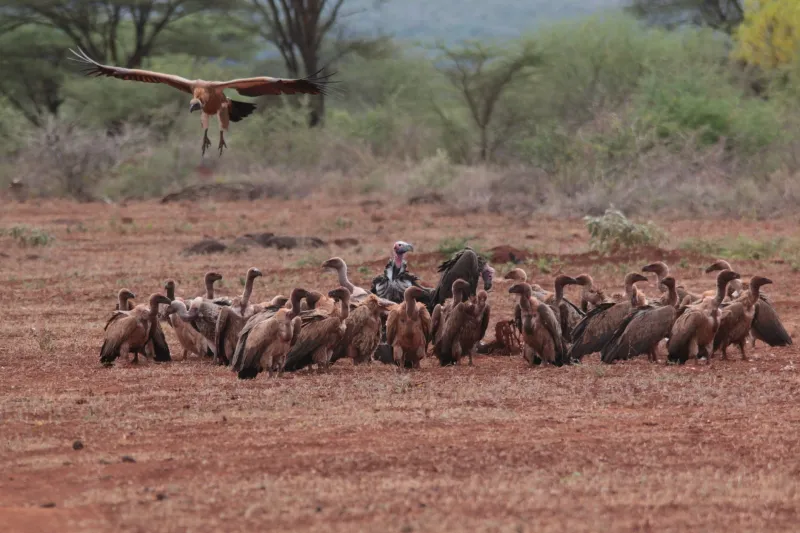
On a clear morning in Kenya’s rangelands, a cluster of vultures is not merely a scenic omen. For field teams, it can be the first alert that a poisoned carcass is on the landscape. The birds are drawn to the same carcass that may have killed them, and their presence creates a narrow window in which investigators must locate the site, secure evidence, and explain what happened before heat, rain, scavengers, or human activity erase the trail. In Kenya, wildlife poisoning is both a conservation problem and an investigative one. The response network has improved, but it still depends on speed, standards, and accountability that are not evenly distributed.
The Alarm System Is Also the Victim
Vultures are often described as nature’s cleanup crew, and the phrase is more than sentimental. By rapidly consuming carcasses, they limit the spread of disease and recycle nutrients across vast landscapes. That efficiency also makes them vulnerable. A single poisoned carcass can attract and kill many birds at once, turning an intended attack on a predator into an indiscriminate wildlife incident. The same sensory system that helps vultures find food makes them reliable indicators that something has gone wrong.
This dual role complicates the response. A report of circling vultures may come from a tour guide, a rancher, a community scout, or a ranger. Each observer sees a different part of the story. The birds may be feeding on a natural die-off, or they may be gathered around bait laced with a pesticide. Investigators must treat the report as a possible crime scene without treating the birds as a spectacle. In practical terms, that means documenting the location, estimating the number and species of affected birds, and keeping people and dogs away from the carcass while trained responders are dispatched.
From Sighting to Sample
A credible poisoning investigation begins long before a laboratory result. The first responder’s job is to preserve what can be preserved. That includes the position of the carcass, the condition of nearby vegetation, the presence of bait material, and any signs of human activity. Photographs are useful, but they are not a substitute for samples. Investigators typically aim to collect appropriate tissue and stomach-content samples, along with any suspected bait, soil, or water, using gloves and clean tools. Each sample must be labeled with time, place, and collector information, then kept cool and transported without breaks in custody.
The laboratory work is where a field observation becomes usable evidence. Kenyan authorities and conservation partners rely on veterinary and forensic laboratories to screen for compounds associated with wildlife poisoning, including pesticides and other toxic substances. The exact suite of tests depends on the case and the laboratory’s capacity. A result that identifies a compound is valuable, but a result that can be tied to a specific carcass, bait station, and suspect is more valuable still. That link depends on documentation as much as chemistry.
Why Hours Matter
Poisoning evidence is perishable. Heat accelerates decomposition. Rain can wash residues away. Scavengers can scatter or consume the very tissues that would have been sampled. In some cases, carcasses are buried or burned before investigators arrive. The longer the delay, the more the case depends on witness testimony and circumstantial detail rather than physical proof.
Speed also matters for human safety. Poison baits are a risk to people, livestock, and domestic dogs. A rapid response can remove a hazardous carcass and warn nearby households. For wildlife, the priority is to prevent secondary poisoning among vultures, eagles, and mammalian scavengers that arrive after the first deaths. For enforcement, the priority is to establish a chain of custody that can withstand scrutiny. A sample without a documented history is difficult to defend in court, and a case that cannot be defended may not deter future incidents.
Gaps in the Response Network
Kenya’s poisoning response capacity is not uniform. Some conservancies and protected areas have trained scouts, rapid communication, and relationships with veterinary teams. Others face long travel distances, limited fuel, unreliable cold storage, and few staff available for callouts. Laboratory turnaround can vary, and feedback to the community that reported the incident is not always consistent. These gaps do not reflect a lack of commitment. They reflect the difficulty of maintaining a specialized forensic capability across landscapes that are large, remote, and often thinly staffed.
A stronger network would rest on several practical elements: standardized field protocols, prepositioned sample kits, reliable cold-chain transport, a central incident database, and regular training for rangers and community scouts. It would also require clearer pathways for sharing results with local communities and prosecutors. Prevention deserves equal attention. Poisoning is often linked to human-wildlife conflict, so faster investigations should be paired with support for measures that reduce the pressure to use toxic baits in the first place.
What US Birders and Donors Can Do
American birders and conservation donors can help without turning a tragedy into entertainment. The most useful support is often unglamorous: funding response kits, cold storage, training, and laboratory capacity. Donors can ask conservation organizations whether they have a written poisoning-response protocol, a documented chain-of-custody procedure, and a working relationship with a laboratory. They can also ask how incident data are shared with authorities and communities.
Travelers should report suspected poisoning to the proper authorities and not attempt to handle carcasses or injured birds. Posting precise locations of poisoned wildlife on social media can attract unwanted attention and interfere with investigations. Birders can contribute useful sightings through established biodiversity recording platforms, but they should keep the welfare of the animals and the integrity of the site in view. Responsible tourism operators can brief guests on what to do if they encounter a wildlife emergency and can support local conservancies that maintain response capacity.
A Ledger Worth Keeping
A vulture investigation is ultimately a test of institutions. The birds provide the alarm, but people must provide the evidence. Kenya does not need a dramatic new narrative about vultures so much as a dependable system for documenting what happens when they die. Each incident that is properly investigated becomes part of a ledger: a record of compounds detected, locations affected, and responses mounted. That ledger is more than a archive of loss. It is a tool for prevention, prosecution, and public trust. The race to test a carcass before the evidence vanishes is a race Kenya can run faster, provided the response network is treated as essential conservation infrastructure.