The Custody Chain of a Frame: Kenya’s Camera-Trap Archives Need Rules, Not Just Racks
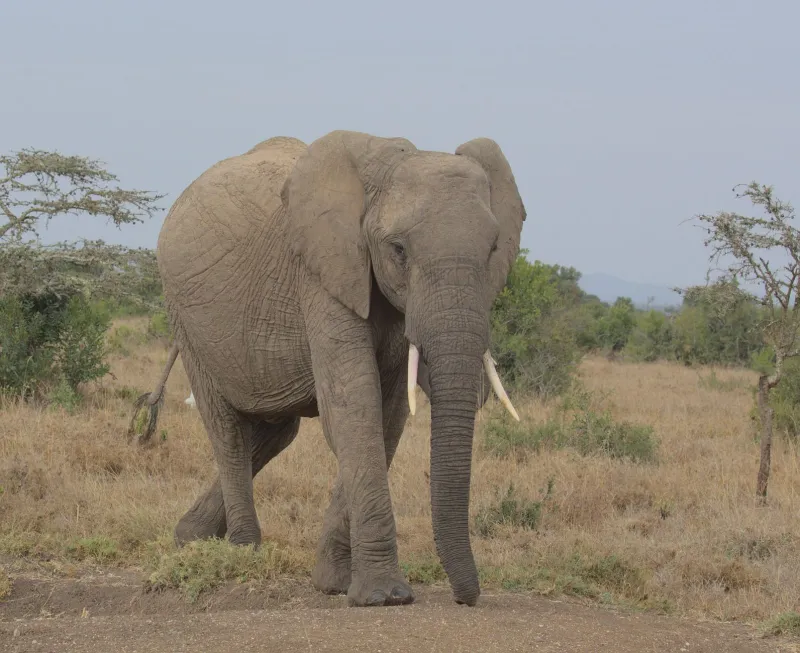
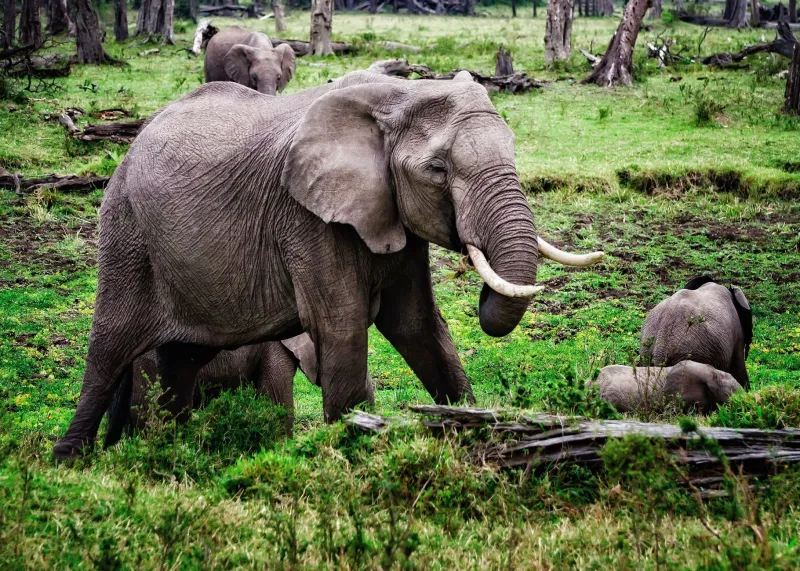
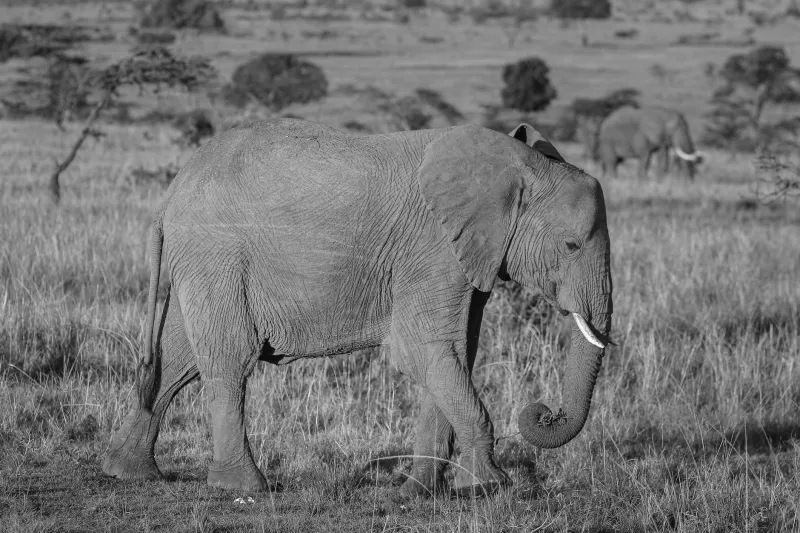
On a dry October morning in 2026, a camera trap strapped to a fever tree in a community conservancy in Laikipia recorded forty frames in nine seconds. An elephant had walked to a waterhole, paused, and moved on. Twelve frames were blurry. Three caught only the animal’s hindquarters. One — the one a field officer would later flag — showed the elephant in profile, a calf behind it, and the blurred edge of a plastic jerrycan left by a herder. The camera saved the sequence to an SD card, went back to sleep, and became part of a problem Kenya’s conservation sector has been slow to name: the custody chain of the image itself.
The frame is not merely a photograph. It is a record with a location, a timestamp, a trigger event, and a set of possible uses. It may train a model that counts elephants. It may support a grazing plan. It may appear in a donor report, a university lecture, or a zoo exhibit. It may also be copied, compressed, renamed, and uploaded into systems that no one in the conservancy can audit. The question is not whether Kenya’s camera-trap archives are large. They are. The question is who controls them, who can see them, and who benefits when they travel.
One Image, Many Hands
In the Laikipia case, the SD card traveled by motorbike to a field office, where a research assistant copied the files onto a rugged laptop. That laptop belonged to a Kenyan conservation organization, but the folder structure had been created by a foreign university partner. The assistant uploaded the sequence to a shared cloud account paid for by the partner. From there, a research coordinator in Nairobi downloaded a copy to a server housed in the city. A graduate student in the United States later pulled the same sequence into a machine-learning pipeline.
Each step was routine. Each step also created a separate copy, a separate permission question, and a separate point of failure. The conservancy could describe the elephant’s movement. The Nairobi office could describe the file name. The U.S. partner could describe the model output. No single party could describe the whole chain without asking the others. That is not a storage problem. It is a governance problem.
The Archive Is Not a Library
Camera-trap archives are often described as libraries of wildlife behavior. The metaphor is generous. A library has a catalog, a circulation policy, and a named custodian. Many camera-trap archives have none of these things in a form that a community conservancy can inspect. Images sit on external hard drives labeled by month and site code. Duplicates accumulate across laptops. Cloud folders are shared with personal email addresses. Metadata is stripped when images are resized for presentations. The original sequence may survive in three places and be findable in none.
For U.S. universities and zoos, this fragmentation is easy to overlook because the scientific output still appears. A paper is published. A population estimate is revised. A grant report is filed. The archive remains a background condition. But the archive is where the relationship lives. If a Kenyan conservancy cannot determine which of its images are held by which partner, it cannot consent to new uses, cannot withdraw an image from a public dataset, and cannot negotiate terms for commercial or educational reuse.
What Kenyan Law Says — and What It Does Not
Kenya’s Data Protection Act, enacted in 2019, gives individuals rights over personal data. Camera-trap images of wildlife are not personal data in the ordinary sense, but they can contain people, vehicles, livestock, and homes. A frame that captures a herder at a waterhole is not only an elephant record. It is also a record of a person in a protected area, possibly without that person’s knowledge. The act’s principles — purpose limitation, minimization, retention limits, and security — apply awkwardly to conservation archives, but they apply.
The law does not, however, resolve the ownership of wildlife images collected on community land. It does not specify whether a foreign university’s cloud account is an acceptable long-term repository. It does not require a benefit-sharing agreement when images are used to train a model that a technology company later commercializes. These gaps are not Kenya’s alone. They are the normal condition of a field that has adopted cheap sensors faster than it has adopted custody rules.
The Donor’s Due Diligence Gap
Technology donors often ship cameras with the best of intentions. A U.S. zoo may fund a camera-trap grid. A university may provide AI tools for species classification. A company may donate cloud credits. Each contribution is useful. Each also shifts the center of gravity of the archive toward the donor’s systems, because the donor controls the account, the software license, or the model weights.
U.S. funders are accustomed to data-management plans for domestic research grants. Those plans usually address sharing, retention, and reproducibility. They rarely address community consent, national data residency, or the exit rights of a field partner. A camera-trap donation should not require less scrutiny than a research grant. The equipment is cheap. The archive is not.
A Practical Checklist Before the Next Camera Shipment
Before sending more cameras or AI tools to Kenya, U.S. partners should ask for five things in writing. First, a data-custody agreement that names the Kenyan organization as the primary custodian of raw images and defines the partner’s access as a license, not a transfer. Second, a community consent protocol that explains how people captured in frames will be treated and how the conservancy can review uses beyond wildlife monitoring. Third, a storage and residency plan that states where the master archive lives, who pays for it, and what happens if the partnership ends. Fourth, a metadata standard that preserves timestamps, site codes, and trigger information through every copy. Fifth, an audit right that lets the Kenyan custodian inspect who has downloaded what, and a benefit-sharing clause for any model or product developed from the archive.
None of these requirements is exotic. They are the minimum conditions for a relationship that treats data as a shared asset rather than a byproduct. The alternative is a familiar pattern: cameras arrive, images accumulate, a foreign partner builds a model, and the community that hosted the fieldwork cannot say what happened to the record.
The Frame Is a Relationship, Not a File
The Laikipia elephant is still in the frame. The jerrycan is still at the edge. The question is whether the conservancy that owns the land, the field officer who carried the card, and the Nairobi server that holds the copy can all describe the same image on the same terms. Kenya’s camera-trap archives will keep growing. The rules around them should grow faster.