A Migration Without a Metronome: Reading Kenya’s 2026 Wildebeest Season Responsibly
On a late-October afternoon in the Maasai Mara, a guide stopped his vehicle beside a stand of fever trees and pointed toward a group of wildebeest grazing in the wrong direction. The herds had not yet massed near the river. The grass was green in some patches and exhausted in others. A week earlier, a short shower had pulled animals east; then the heat returned, and the movement stalled. For the visitors in the vehicle, the lesson was immediate: the migration is not a train schedule.
The Calendar Is Not the Contract
Kenya’s rainfall generally follows two seasons: the long rains from March to May and the short rains from October to December. The wildebeest migration across the Mara-Serengeti ecosystem is often described as a circular calendar: calving in the southern Serengeti, movement north and west, river crossings in the Mara, and a return south. But the animals respond to grass, water, and safety, not to a printed itinerary.
In 2026, the onset of the short rains has been uneven. Some parts of the Mara catchment received early showers; others remained dry. Kenya Meteorological Department advisories have pointed to variable rainfall rather than a uniform start. For travelers, that means the old advice to book the first two weeks of August for a river crossing is less reliable than ever. For the ecosystem, it means the migration is being stretched, fragmented, and reordered in ways that scientists are still documenting.
What the Rains Are Doing
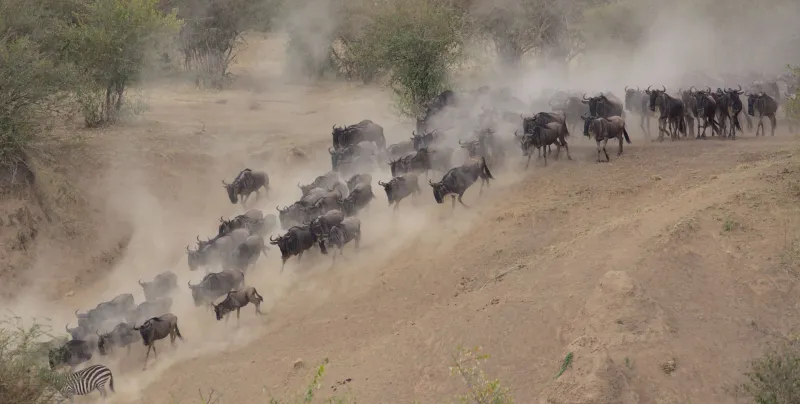
Wildebeest move for forage. They prefer short, green grass, and they will travel long distances to find it. When rain falls in patches, the herds splinter. Some groups move toward the Mara; others remain in the Serengeti or drift into conservancies. The result is not a single thundering column but a series of smaller movements that can be harder to predict and easier to disturb.
Climate variability in East Africa is influenced by large-scale ocean and atmosphere patterns, including the Indian Ocean Dipole. Those patterns do not determine a single season in a single place, but they can tilt the odds toward wetter or drier conditions. In recent years, Kenya has experienced both severe drought and intense flooding. The 2024 drought and the heavy rains that followed are part of the living memory of many conservancy managers. Past years are not a forecast, but they are a warning against assuming stability.
Predators on a Different Schedule
When wildebeest spread out, predators adjust. Lions and cheetahs follow the herds, but they also rely on resident prey. Hyenas patrol territory. Leopards use riverine cover. A scattered migration can mean more encounters between livestock and predators, more pressure on community land, and more conflict.
The timing of births also matters. Predator activity often clusters around calving and around river crossings, when animals are concentrated and vulnerable. If the rains arrive late and calving is less synchronized, the predator response may also be less predictable. Guides who understand this do not promise a kill or a crossing. They read tracks, listen to alarm calls, and watch the herd’s posture.
Field Reports from the Mara
In the Mara conservancies, rangers and guides described a 2026 season of stops and starts. Herds moved toward the river, then back into the grasslands. Some crossings occurred in smaller groups rather than in a single dramatic surge. One guide noted that visitors who stayed for five nights saw more variety than those who came for a single day and expected a crossing.
That is not a reason to despair. It is a reason to travel differently. The migration is more than a river crossing. It is the movement of hundreds of thousands of animals across a working landscape, and it includes births, predation, dust, rain, and recovery. The river is one scene in a much longer film.
The Ethics of the River Crossing
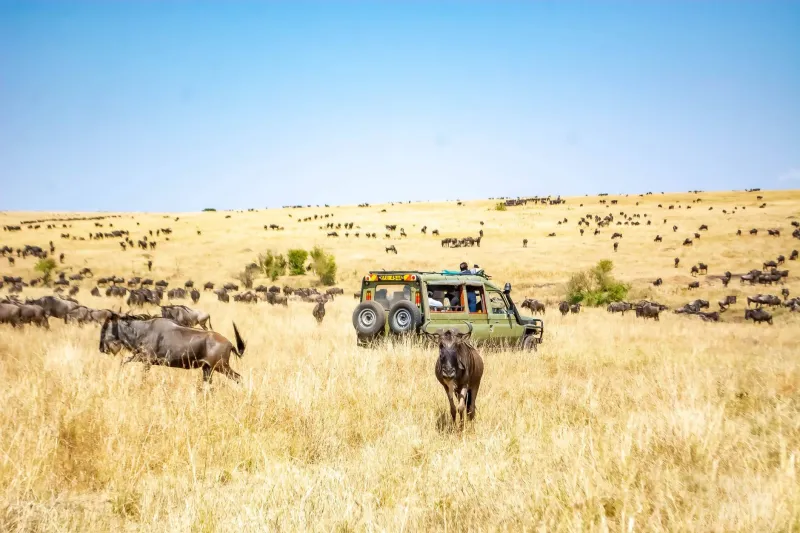
River crossings draw crowds. Vehicles line up along the banks. Engines idle. Guides jockey for position. The pressure to deliver a crossing can push drivers to break rules: off-road driving, crowding the bank, blocking escape routes, or chasing animals with drones. These actions are not harmless. They can separate mothers from calves, push animals into unsafe water, and erode the very experience visitors came to see.
Responsible viewing begins with accepting uncertainty. A guide who says the crossing is not guaranteed is being honest, not unhelpful. A camp that promises a crossing on a specific date is making a claim the ecosystem cannot honor. Travelers should choose operators that limit vehicle numbers, avoid off-road driving, respect conservancy rules, and employ local guides who know the land.
A Better Way to Watch in 2026
US travelers can plan for flexibility. Book a longer stay rather than a single-day dash to the river. Ask whether your operator works with conservancies and pays community bed-night fees. Ask how many vehicles will be at a sighting. Ask whether drones are used. Ask what happens if the herds move elsewhere.
Consider the quieter months and places. The Mara is not only about crossings. The Loita Hills, the conservancies bordering the reserve, and the broader ecosystem offer excellent wildlife viewing with fewer vehicles. A trip that includes community land and local guides can spread tourism income beyond the main reserve.
What the Migration Is Telling Us
A shifting migration is not simply a tourism inconvenience. It is a signal. When rains miss their usual calendar, grass and water change, herds disperse, and predators follow. Those changes ripple into livestock areas, conservancy budgets, and conflict hotspots. The long-term health of the Mara depends on protecting movement corridors, maintaining grassland, and supporting the communities that live with wildlife.
For visitors, the ethical choice is to watch the migration as a process, not a product. The herds do not owe anyone a crossing. The river is not a stage. In 2026, the most responsible view may be the one that accepts the migration on its own terms, with patience, restraint, and respect for the people and animals whose lives are shaped by every missed rain.