The Provenance File: How Kenya’s Native Grass Seed Banks Guard the Future of Rangeland
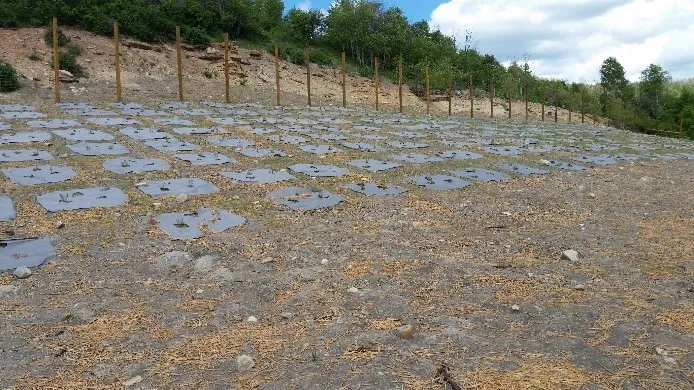
Photo: Intermountain Region US Forest Service, Public domain, via Wikimedia Commons
On a dry stretch of Kenyan rangeland, restoration often begins with a humble object: a labeled sack of grass seed. The sack is not a commodity. It is a record of place—where the seed was collected, when, by whom, and under what conditions. In 2026, as Kenya’s restoration ecologists confront degraded grazing lands, invasive species, and increasingly erratic rains, native seed banks have become quiet infrastructure for conservation. Their value lies less in volume than in verifiable provenance.
Why provenance is the product
A native grass seed bank is not simply a warehouse. It is a system for conserving local genetic adaptation. Grasses that evolved in Kenya’s Laikipia plateau, the Amboseli basin, or the northern rangelands differ in root architecture, flowering time, drought tolerance, and response to grazing. A seed mix sourced from a distant ecological zone may germinate, but it may not persist. Restoration ecologists increasingly describe provenance as the first test of whether a replanting project is ecological or merely botanical.
This is not a uniquely Kenyan insight. In the United States, the Natural Resources Conservation Service uses seed transfer zones and cultivar selection to reduce maladaptation in rangeland plantings. Land-grant universities have spent decades documenting how local ecotypes outperform generalist mixes under drought and grazing pressure. Kenya’s seed banks are adapting that logic to ecosystems with fewer formal seed zones, more variable rainfall, and a stronger reliance on community-based collection.
The practical consequence is that a seed bank’s accession records matter as much as its cold room. A well-run facility can tell a restoration manager where a lot came from, what its germination rate is, and which ecological site it is suited to. A poorly documented sack is an expensive gamble.
Inside the cold room and the nursery
Storage is a discipline, not a default. Grass seed varies in how long it remains viable under cool, dry conditions. Some species retain germination capacity for years; others decline quickly or require after-ripening. Seed banks therefore run germination tests at intervals, track moisture content, and maintain backup samples. The better facilities pair storage with nurseries that multiply wild-collected seed into quantities large enough for field planting.
Community nurseries are a crucial link. They allow local collectors and growers to produce seed and seedlings without stripping wild populations. They also create a demand signal: if restoration projects commit to buying native seed from community nurseries, the nurseries can plan production. That is a different model from importing a ready-made mix. It is slower, but it keeps economic value in the rangelands and builds local capacity to identify, collect, and propagate native species.
For US donors, the nursery model raises a useful question: who owns the seed and the knowledge? A project that trains community collectors but leaves no local seed enterprise is a short-term intervention. A project that supports a nursery, a seed bank, and a purchasing agreement is closer to infrastructure. The difference is visible in budgets and in contracts, not only in photographs of seedlings.
The arithmetic of a native mix
Native grasses outperform imported mixes for reasons that are ecological before they are ideological. Local species tend to match the timing of rains, respond to native herbivores, and coexist with soil microbes and pathogens in ways that exotic mixes do not. They may establish more slowly, but they often persist through dry spells that cause imported cultivars to fail. A restoration seed mix is also not a single species. It is a small community: early colonizers, perennial bunchgrasses, and nurse species that together cover soil and support grazing systems.
That complexity creates a supply problem. Native seed is expensive to collect, clean, test, and store. Demand from restoration projects is often episodic. Seed banks can smooth that demand only if they have reliable buyers and multiyear planning. This is where donors and responsible tourism operators can play a constructive role—not by buying seed as a gesture, but by funding the boring parts: germination testing, accession databases, nursery equipment, and monitoring.
What to ask before funding a replanting project
A credible native seed project should be able to answer basic provenance questions. Where were the maternal plants? When was the seed collected? Has it been tested for germination? Which ecological site is it intended for? Who collected it, and under what permit? These are not hostile questions. They are the same questions a US land manager would ask before purchasing seed for a federal restoration contract.
Donors should also ask for a monitoring plan that extends beyond the first green flush. Restoration is judged by persistence, not by emergence. Ask how the project will measure survival after the first dry season, how grazing will be managed, and who is responsible for maintenance. Ask whether the seed bank has a backup power plan for its cold storage and whether accession data are digitized. Ask how community nurseries are paid and whether local collectors have been trained in sustainable harvest.
Travelers can support the same standards without turning a holiday into an audit. A lodge that claims to restore rangeland should be able to name its seed source and its monitoring partner. Visitors should be skeptical of “seed bomb” giveaways and souvenir seed packets, which can move genetic material without provenance controls. The better contribution is a vetted donation to a community nursery or seed bank, or a request that a tourism operator disclose its restoration sourcing.
A ledger, not a slogan
Kenya’s native seed banks are not a silver bullet for rangeland degradation. They are a piece of conservation infrastructure, and like all infrastructure they depend on maintenance, records, and honest accounting. The question for 2026 is not whether grass should be banked. It is whether the provenance file is good enough to guide where the seed goes next. That is a technical question, but it is also a governance one—and it is the difference between a restoration project that looks green for a season and one that holds the ground.